



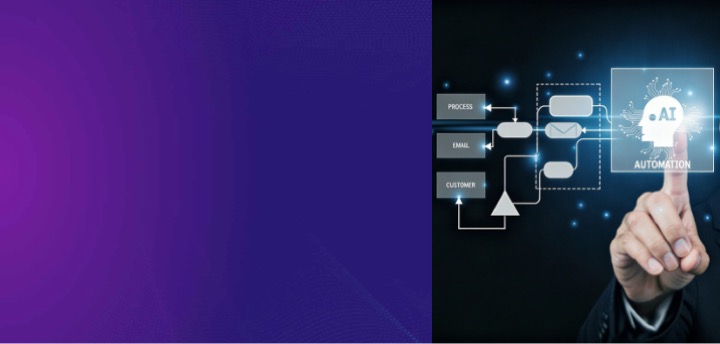
AI automation is designed to handle predictable, rule-based, and repetitive tasks efficiently, following a clear “if X, do Y” approach. In contrast, AI agents are autonomous, goal-driven systems that can reason, adapt to new information, and make decisions to tackle complex or unstructured problems. While automation ensures consistency and accuracy in routine workflows, AI agents provide flexibility and intelligence for handling uncertain or dynamic situations.
AI agents are ideal for complex tasks that need smart decisions and flexibility. They learn and improve over time by handling workflows across systems. Automation still works best for routine, repetitive tasks, and using both together makes businesses faster and more efficient.
How Traditional Automation Works in Businesses?
Automation helps businesses handle repetitive tasks like data entry, report generation, and scheduled emails. It is fast and reliable but struggles with unexpected situations or complex workflows. Here’s how it works.
Step 1: Identify Tasks That Can Be Automated
- Look for repetitive tasks that follow predictable patterns and don’t require human creativity.
- Examples include entering data, sending standard emails, and routine reporting tasks.
- Focus on processes where automation can replace humans without risking errors.
Step 2: Document the Exact Process
- Write down each step of the task clearly, including checks and decision points.
- Define how the task starts, progresses, and finishes proper automation mapping.
Step 3: Choose the Right Automation Tool
- Select tools based on task type: robots for physical, software for digital tasks.
- Use workflow software, scripts, or rule-based programs to replicate processes.
- Ensure the tool can execute each step exactly as documented for accuracy.
Step 4: Create Clear Rules for Automation
- Define precise rules that tell the system what to do in each situation.
- Rules guide automation and prevent mistakes when handling predictable tasks.
Step 5: Integrate With Existing Systems
- Connect automation to software like ERP, CRM, or HR systems for seamless operation.
- Integration allows data to move automatically without manual transfers or errors.
- Ensures workflows stay synchronized and reduce human effort across departments.
Step 6: Test the Automation Thoroughly
- Test the workflow to confirm all steps executed correctly and rules are followed.
- Check if data handling, transfers, and outputs match expected results precisely.
- Testing prevents errors and ensures the system works reliably when living.
Step 7: Launch and Monitor Continuously
- Start automation after testing and regularly monitor errors or workflow changes.
- Update rules when processes change to maintain accuracy and reliability over time.
- Continuous monitoring ensures automation runs smoothly and remains effective for the long-term.
How AI Agents Transform Workflows?
AI agents are changing the way businesses handle tasks. Unlike traditional automation, they can understand instructions, make decisions, and manage entire workflows on their own. Here’s how they work and why they are becoming essential for modern organizations.
1. AI Agents Understand Tasks Like Humans
- Read instructions, understand natural language, and figure out what needs to be done.
- Interpret emails, documents, chats, or dashboards without needing rigid rules.
- Decide the next step intelligently, similar to how a human would.
- Handle unstructured tasks that traditional automation cannot manage.
2. Breaking Big Processes into Smaller Steps
- Divide large workflows into smaller, manageable actions automatically.
- Each step is completed without step-by-step programming or manual intervention.
- Ensure complex tasks are done efficiently and consistently.
3. Learning and Improving Over Time
- Unlike traditional automation, AI agents get smarter as they work.
- They learn from past decisions, corrections, and new incoming data.
- Accuracy improves with repeated workflows and reduced dependency on humans.
- This enables the system to handle more complex tasks over time.
4. Working Across Multiple Tools and Systems
- AI agents can interact with different apps just like employees do.
- Read emails, update spreadsheets, pull data from CRM systems, and write summaries.
- No manual copy-pasting or switching between tools is needed.
- Workflows become faster, smoother, and less prone to human error.
5. Making Decisions, Not Just Following Rules
- AI agents are not limited to “if-this-then-that” logic.
- Prioritize urgent requests, choose templates, and identify missing information.
- Allows businesses to manage real-world situations more effectively.
- Decisions are smarter, and workflows become more adaptable to change.
6. Collaboration and Communication
- AI agents can communicate and clarify tasks with teams.
- Ask for missing information and notify teams about progress.
- Provide suggestions or clarifications when instructions are unclear.
- Collaboration reduces mistakes and improves overall workflow reliability.
Building AI agents that plan, decide, and adapt requires more than basic automation knowledge, and the Executive Post Graduate in Generative AI and Agentic AI by IIT Kharagpur helps you develop that advanced capability.
Key Differences Between AI Agents and Automation
The following comparison highlights how AI agents and traditional automation differ in approach, capabilities, and overall impact on workflows. Knowing these differences helps businesses pick the right approach for their tasks.
| Aspect | AI Agents | Traditional Automation |
|---|---|---|
| Decision-Making | Can decide what action to take to reach a goal. | Follow fixed steps that were programmed earlier. |
| Adaptability | Can handle new or unexpected situations and adjust. | Cannot adapt; needs reprogramming when things change. |
| Data Handling | Understands unstructured data like text, images, and videos. | Works best with structured, clean, and formatted data. |
| Goal Orientation | Goal-driven; figures out the steps by itself to achieve the goal. | Task-driven; performs only the pre-set steps in order. |
| Independence | Works with little human supervision. | Needs human help if something goes beyond its rules. |
Advantages of AI Agents Over Traditional Automation
AI agents offer several advantages over traditional automation, making them smarter, more flexible, and more efficient. The following points explain why businesses are increasingly adopting AI agents to improve workflows and drive better outcomes.
- Highly Adaptive and Flexible: Can adjust to changing data, unexpected issues, or new situations easily.
- Complete Workflow Management: Handles entire processes from start to finish, not just isolated tasks.
- Intelligent Decision Support: Offers insights, recommendations, and takes autonomous actions to reach goals.
- Easily Scalable Across Teams: Can operate in multiple departments with minimal human supervision or guidance.
- Continuous Learning and Improvement: Learns from feedback and past outcomes to perform better over time.
Master the shift from automation to agents with IIT Kharagpur and stay future‑ready
When to Use Traditional Automation vs AI Agents?
Choosing the right tool for a task is important. Some tasks need traditional automation ideal, while complex, multi-step workflows need AI agents. The following section explains when to use traditional automation, AI agents, or a combination of both for business workflows.
When to Use Traditional Automation
- Best for repetitive tasks that follow predictable steps and rarely change over time.
- Works well for high-volume processes that need speed and consistent accuracy.
- Ideal for rule-based tasks where decision-making or adaptability is not required.
When to Use AI Agents
- Perfect for complex workflows requiring decisions, reasoning, and adaptability to new situations.
- Can coordinate across multiple systems, applications, and departments to complete multi-step tasks.
- Learn from outcomes, feedback, and changing conditions to improve performance over time.
Hybrid Approach
- Use automation for simple tasks and AI agents for more complicated work.
- Combines speed, reliability, and smart problem-solving in the workflow.
- Ensures businesses get both speed, reliability, and intelligent problem-solving capabilities.
Future Outlook for AI Agents and Automation
AI agents are transforming the way businesses work, moving beyond simple automation. The following points highlight key trends, future applications, and the growing economic impact of agentic AI.
- Rise of Agentic AI:
2026 marks the shift where AI moves from content creation to independent actions.
- Autonomous Decision-Making:
By 2028, AI agents will make around 15% of routine workplace decisions independently.
- Human and AI Collaboration:
Future workplaces will integrate AI agents alongside humans, improving teamwork and productivity by 2028.
- Advanced Workflow Automation:
AI agents handle complex, multi-step tasks across software without manual integration or human intervention.
- Integration in Physical and Digital Systems:
AI agents will operate in physical spaces through robots in factories, warehouses, and operations.
- Economic Impact:
Global AI agent investments may exceed $47 billion by 2030, transforming multiple key industries.
Conclusion
AI agents and automation are pushing businesses toward smarter and more independent ways of working. As AI agents handle decision‑making and complex tasks, companies can run processes faster and with greater accuracy. This shift reduces routine workload and gives organizations smoother, more efficient workflows.
At the same time, these intelligent systems free employees to focus on strategy, creative thinking, and innovation instead of repetitive tasks. The future will be shaped by tools that combine speed, intelligence, and teamwork, creating workplaces that are more flexible, more productive, and better prepared for change.
FAQs on AI Agents vs Automation
1. How are AI agents different from traditional automation tools?
AI agents can analyze situations, make decisions, and adjust their actions, while traditional automation only follows preset rules. Automation is predictable but limited. AI agents use intelligence to handle varied and changing tasks, making them more versatile compared to fixed-rule systems.
2. Why are AI agents considered more “intelligent” than automated systems?
AI agents process information using models that allow reasoning, pattern recognition, and adaptive behavior. They don’t just execute command, they evaluate context and choose actions. Automated systems respond only to predefined conditions, while AI agents can think through problems in a more human-like way.
3. How does the level of human involvement differ between AI agents and automation?
Automation often needs manual monitoring and intervention when exceptions occur. AI agents can operate largely on their own, requesting help only when needed. They handle decisions, respond to changes, and manage workflows independently, reducing the need for constant human supervision.
4. How does decision-making differ between AI agents and automated systems?
Automation makes decisions strictly based on hard-coded rules and cannot be chosen beyond them. AI agents evaluate multiple factors and determine the best course of action. Their reasoning ability helps them handle situations where clear rules may not exist or may require flexible interpretation.
5. What makes AI agents more capable of handling dynamic tasks compared to automation?
AI agents observe changes as they happen and adjust their plans accordingly. They can switch strategies, modify steps, or rethink priorities. Automation cannot do this because it follows rigid instructions, making AI agents more effective in fast-changing or unpredictable environments.
6. How do AI agents manage situations where information is incomplete?
AI agents can infer missing information, request clarification, or make the best possible decision using available data. Their models allow them to continue working even when details are imperfect. Automation typically breaks or stops because it depends on exact inputs.
7. How do AI agents adapt when a business process changes?
AI agents adjust their behavior by learning from new data and feedback. They don’t require full reprogramming to fit changed processes. Automation, however, needs updated rules every time something shifts, making AI agents more suitable for evolving operations.
8. How do AI agents handle unexpected inputs compared to automation?
AI agents can interpret unfamiliar information, analyze its meaning, and decide what to do next. They rarely fail outright when facing new inputs. Automation usually stops functioning or throws errors because it cannot process anything outside its predefined structure.
9. In what situations do AI agents outperform automation?
AI agents excel in tasks involving decisions, adaptation, or creativity. They are strong in environments where processes shift frequently or require interpretation. Automation cannot manage these situations because it relies on strict rules and struggles when unexpected conditions appear.
10. What types of tasks are better suited for automation instead of AI agents?
Automation is ideal for stable, routine, and repetitive tasks that follow the same steps every time. This includes activities with predictable inputs and outputs. When consistency, speed, and precision matter more than flexibility, automation remains the best fit.
11. Is automation still necessary when using AI agents?
Yes, Automation provides reliable execution for repetitive tasks, while AI agents handle tasks requiring intelligence. Using both creates balanced workflows automation for consistency and AI agents for complexity. Together, they deliver efficiency and adaptability without replacing one another.
12. Can AI agents improve processes that are already automated?
AI agents can enhance automated workflows by managing exceptions, optimizing steps, and making decisions when rules fall short. They complement automation by adding intelligence, reducing failures, and ensuring processes work smoothly even when conditions change or data vary.
13. Can AI agents work together as a group, unlike automation systems?
Yes, AI agents can share information, coordinate tasks, and divide work based on goals. This collaborative behavior helps solve complex, multi-step problems. Automation systems typically act alone and require manual integration to communicate or cooperate with each other.
14. How does data processing differ between AI agents and automated workflows?
AI agents can analyze unstructured data such as text, audio, or images, allowing them to understand real-world inputs. Automation relies on structured, formatted data and cannot interpret messy or unclear information. This difference expands where AI agents can be used.
15. Which is better for long-term scalability: AI agents or automation?
AI agents scale more easily because they adapt to new tasks and changing environments without major rework. Automation requires constant updates as processes grow or evolve. For long-term operational expansion, AI agents offer more flexibility and reduced maintenance effort.
16. Which is easier to deploy in a traditional IT environment: automation or AI agents?
Automation is generally simpler to set up because it only needs to rule out configurations. AI agents require access to broader data sources, integration points, and learning capabilities. While both work in traditional setups, automation usually involves a faster and easier deployment process.
17. Do AI agents require different infrastructure than traditional automation?
AI agents benefit from systems that support data flow, APIs, and real-time decision models. Automation can operate in simpler environments with fixed rule engines. While both can coexist, AI agents often need more robust and flexible infrastructure to perform optimally.
18. Do AI agents require ongoing training, unlike static automation tools?
Yes, AI agents improve through continuous learning and periodic training, helping them stay accurate over time. Automation tools don’t learn; they only need updates when business rules change. The training process keeps AI agents adaptable and relevant to evolving needs.
19. How do performance outcomes differ between agent-driven workflows and automated ones?
Automated workflows deliver consistent results but struggle with variation. Agent-driven workflows adjust to conditions and often achieve better outcomes in dynamic environments. Over time, AI agents can refine their performance, while automation remains limited to predefined steps.
20. Do AI agents reduce operational costs more effectively than automation?
AI agents often lower long-term costs by automating complex tasks, reducing manual oversight, and learning from results. Automation saves money initially but can become costly when processes frequently change. AI agents offer broader, longer-lasting cost benefits across evolving workflows.