



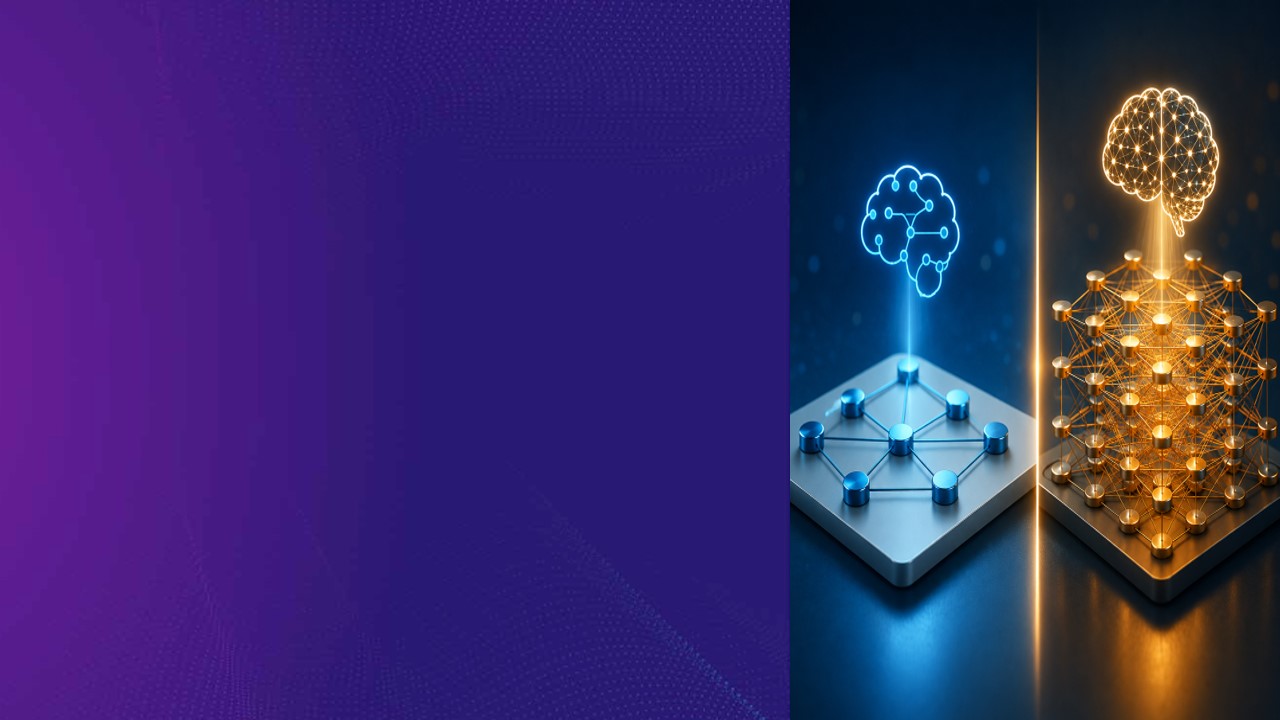
People use machine learning and deep learning like they're the same thing, but they're not.
Machine learning is the bigger, wider idea. It's when a computer learns from data instead of just following rules someone typed in. Deep learning is a smaller part of that field. It uses layered neural networks made to work a bit like how our brain works.
With machine learning, a person has to step in and tell the system which details in the data actually matter. Deep learning doesn't need that. It finds those details by itself.
Machine learning does fine with small amounts of data and simple problems. Deep learning needs a lot more data to work, but it's much better at handling messy stuff like photos and speech.
For most regular business problems, plain machine learning gets the job done. Deep learning is worth using when you're working with things like images, videos, or written and spoken language.
So basically, deep learning always counts as machine learning, but machine learning doesn't always mean deep learning.
In this blog, you'll see exactly the difference between deep learning vs machine learning, when to pick one over the other, and some real examples of where each one works best. By the end, choosing between them should feel a lot easier.
What's the Difference Between Machine Learning and Deep Learning?
People use "machine learning" and "deep learning" like they mean the same thing, but they don't, and the difference actually matters. It shapes how you approach a problem and what tools you reach for. When you break down deep learning vs machine learning, deep learning is really just a smaller piece of machine learning, one that uses layered neural networks to handle data too messy or complex for regular machine learning to sort through.
If you want to build these skills properly, the Executive Post Graduate Certificate in Applied AI & Machine Learning from IIT Kharagpur covers both areas through hands-on projects, so you learn exactly when to use which.
How Machine Learning Works
Machine learning teaches a computer to spot patterns in data instead of following fixed rules. You feed it examples, it learns the pattern, then it uses that to guess on new data.
Collect the data, clean it up, then pick an algorithm and train it
Test the model to see how well it actually predicts
Common ones used are decision trees, random forests, and linear regression
A person still has to pick which details matter, this step is called feature engineering
How Deep Learning Works
Deep learning runs on neural networks, loosely based on how the brain works. Nobody tells it what to look for, it figures that out on its own through layers.
Each layer processes the data a bit and passes it to the next
Stack enough layers and that's where "deep" comes from
Show it enough cat and dog photos, it learns to tell them apart by itself
Same with audio, it learns to recognise speech without being told what to listen for
The Core Difference Between Machine Learning and Deep Learning
Machine learning needs a person to pick up the features. Deep learning finds them on its own. That one gap explains most of the other differences.
Machine Learning | Deep Learning |
Needs a person to pick the features | Finds features on its own |
Suits structured data like spreadsheets | Suits images, video, and audio |
Needs less data to work well | Needs a lot more data |
Runs on regular hardware | Usually needs GPUs |
Easier to explain and understand | Often works like a black box |
When Should You Use Machine Learning or Deep Learning?
When you're weighing deep learning vs machine learning for your own project, it isn't about which one is better; it's about which one fits your problem. Here's a quick way to know which side you are on.
Use Machine Learning When...
Machine learning works best when your problem is simple and your data is manageable. Here's when it makes sense to go with it.
Your data sits in spreadsheets or databases, not raw images or audio
You only have a few thousand examples, not millions
You need to explain why the model made a certain decision, some industries require this
You don't have heavy computing power, machine learning runs fine on a normal computer
You need quick results, these models train in minutes or hours, not days
You're solving straightforward problems like classification, regression, or recommendations
Use Deep Learning When...
Deep learning makes sense once your data gets messier and bigger, and the problem is too complex for a person to break down manually.
You're working with images; this is where computer vision comes in
You're dealing with speech or audio, like voice recognition
You're working on language tasks like translation, sentiment analysis, or text generation
You have a huge amount of data; deep learning actually gets better the more data you feed it
You have access to GPUs, without that kind of power, deep learning isn't practical
The patterns in your problem are too abstract for a human to define manually
Machine Learning vs Deep Learning: Applications and Trade-Offs
Both machine learning and deep learning show up in real products you probably use every day, just in different ways. Here's where each one actually gets used, and what it costs you to use them.
Common Machine Learning Applications
You'll find machine learning working quietly behind a lot of everyday services without you noticing.
Banks use it to spot customers likely to leave
Gmail uses it to filter out spam
Lenders use it to check credit risk
Amazon uses it to recommend products
Doctors use it to help read lab results
Credit card companies use it to catch suspicious transactions
Common Deep Learning Applications
Deep learning tends to show up wherever the data gets more complex, like images, voice, or video.
Facebook uses it to tag people in photos
Alexa and Google Assistant use it to understand what you say
Self-driving cars use it to spot pedestrians and signs
ChatGPT and similar tools run on deep learning
Google Translate uses it to translate languages
Netflix uses it to understand content and suggest shows
Performance, Complexity and Data Requirements
The two also differ a lot in what they need to actually work well.
Factor | Machine Learning | Deep Learning |
Data needed | 1,000 to 100,000 examples | 1 million to billions of examples |
Effect of more data | Performance plateaus after a point | Keeps improving with more data |
Training time | Minutes to hours | Hours to weeks |
Prediction speed | Milliseconds once trained | Milliseconds once trained |
Hardware | Runs fine on a regular laptop | Needs GPUs or TPUs |
Cost to build | Thousands | Tens of thousands or more |
Maintenance | Stays accurate for longer | Drifts faster, needs frequent updates |
How Do You Choose Between Machine Learning and Deep Learning?
Picking the right one comes down to asking yourself a few honest questions about your project.
What kind of data do you have? If it's organised in tables, machine learning is probably the right fit, if it's images, video, audio, or text, you're likely looking at deep learning
How much data do you actually have? Machine learning works well with hundreds of thousands of examples, deep learning needs millions
What are your real constraints? Think about how much time you have, how much computing power you can access, and how much you're willing to spend
Do you need to explain your model decisions to stakeholders or regulators? If yes, machine learning is the safer bet; if not, deep learning might give you better results
Has someone already solved this problem? Pretrained deep learning models exist for common tasks like recognising images or understanding language, so sometimes it makes more sense to use one of those instead of building your own from scratch
How Can IIT Kharagpur Online Help You Build AI and Machine Learning Skills?
Learning machine learning and deep learning properly needs structured guidance, not just articles. IIT Kharagpur is one of India's oldest and most respected IITs, and its online arm brings that same rigour to working professionals. The Executive Post Graduate Certificate in Applied AI & Machine Learning by IIT Kharagpur Online mixes theory with real projects, taught by IIT faculty with years of research and industry experience.
You'll get hands on practice building both machine learning and deep learning solutions
You'll work with real datasets instead of just theory
You'll understand the trade-offs well enough to make the right call for your own problems
You'll earn a certification backed by the IIT Kharagpur name, which carries real weight with employers
Whether you're starting fresh or building on what you already know, learning from a recognised institution makes a real difference
Conclusion
Machine learning and deep learning aren't rivals; they just solve different kinds of problems. One is fast, practical, and easy to explain; the other is powerful but needs more data and more resources to work well.
Think of a bank checking loan applications versus a phone unlocking with your face. The first is a clean, structured problem that machine learning handles easily. The second involves reading complex visual data, which is exactly where deep learning takes over.
So, the real decision comes down to your data, your budget, and how complex your problem actually is. Most real-world work still works on plain machine learning; deep learning just gets more attention because it powers flashier tools. Once you understand what each one is actually good for, picking the right one gets a lot easier.
If you want to get properly skilled at both, the Executive Post Graduate Certificate in Applied AI & Machine Learning from IIT Kharagpur Online is a solid place to start, backed by real IIT faculty and hands on projects.