

AI Engineering Teams vs Traditional Engineering Teams is becoming an important topic as software development continues to evolve in 2026. Organisations are now comparing two very different ways of building technology systems—one based on intelligence and learning, and the other based on fixed rules and manual coding.
In simple terms, AI engineering teams focus on building systems that learn from data and improve over time using technologies like machine learning models and Large Language Models (LLMs). On the other hand, traditional engineering teams build systems using fixed logic and explicit code that follows predefined instructions without learning or adaptation.
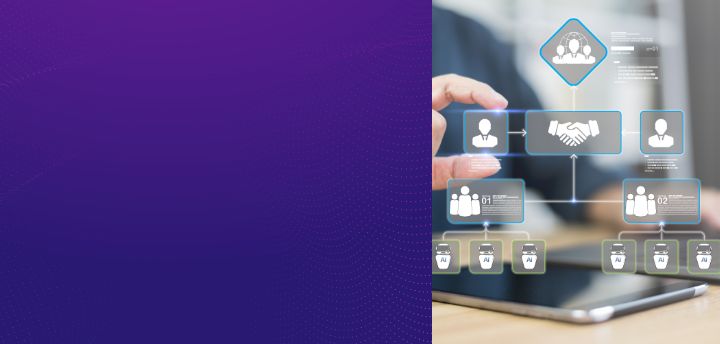
This shift is also changing the AI engineering team structure, where teams now include data scientists, ML engineers, and AI specialists working together in iterative, data-driven workflows instead of only relying on conventional software developers.
What Are AI Engineering Teams vs Traditional Engineering Teams?
AI Engineering Teams vs Traditional Engineering Teams refers to two different approaches to building software systems in modern organisations. Both teams aim to deliver reliable applications, but they follow very different methods, tools, and thinking patterns.
AI engineering teams focus on building intelligent, data-driven systems that can learn, adapt, and improve over time. They use technologies like machine learning models, Large Language Models (LLMs), and AI agents to make software more dynamic and automated. In contrast, traditional engineering teams build software using fixed rules, manual coding, and predefined logic where every outcome is explicitly programmed.
In simple terms, AI engineering teams create systems that “learn and evolve,” while traditional engineering teams create systems that “follow instructions.”
Key Differences Between AI Engineering Teams vs Traditional Engineering Teams
AI-driven development - AI engineering teams use machine learning models and intelligent tools to automate and enhance software creation.
Rule-based systems - Traditional teams rely on explicit logic and fixed programming rules to build applications.
Data-centric approach - AI teams depend heavily on data to train models and improve system performance over time.
Manual coding approach - Traditional teams focus on writing and maintaining code manually for every feature and function.
Continuous learning systems - AI engineering systems improve automatically as they receive more data and feedback.
Static system behaviour - Traditional systems remain unchanged unless developers manually update or modify the code.
AI engineering team structure - AI teams include ML engineers, data scientists, and AI specialists working together in iterative workflows, while traditional teams mainly consist of software developers and testers.
How AI Engineering Teams Work
AI engineering teams work by combining software development with artificial intelligence, machine learning, and data-driven decision-making. Instead of relying only on manual coding, these teams build systems that can learn from data, automate tasks, and continuously improve over time. The workflow is more iterative, experimental, and AI-assisted compared to traditional engineering teams.
In simple terms, AI engineering teams use models, data, and automation tools to design software that is intelligent and adaptive, not just rule-based. This is where a well-defined AI engineering team structure plays an important role in aligning people, tools, and workflows effectively.
How Traditional Engineering Teams Work
Traditional engineering teams work by building software using predefined rules, manual coding, and structured development processes. Every feature, function, and behaviour is explicitly written by developers, and the system follows fixed logic without learning or adapting from data. This approach is more deterministic and relies heavily on human effort at every stage of the software development lifecycle.
In simple terms, traditional engineering teams create software that works exactly as it is programmed, without any intelligence or self-improvement capabilities.
Benefits of AI Engineering Teams vs Traditional Engineering Teams
AI Engineering Teams vs Traditional Engineering Teams shows a clear shift in how modern software is built and delivered. While traditional teams rely on manual effort and fixed processes, AI engineering teams use intelligence, automation, and data-driven systems to improve speed, quality, and scalability.
Key Points
Faster development cycles - AI engineering teams use automation and AI tools to speed up coding, testing, and deployment compared to slower manual processes in traditional teams.
Higher productivity - Developers in AI teams focus on complex problem-solving while AI handles repetitive tasks, unlike traditional teams where most work is manual.
Improved code quality - AI systems help detect bugs, optimise code, and reduce errors, leading to more reliable software than purely human-written code.
Better scalability - AI engineering teams can scale systems efficiently using models and automation, while traditional teams need more human resources to scale.
Data-driven decision-making - AI teams use real-time analytics and models for decisions, while traditional teams depend on experience and manual analysis.
Reduced operational effort - Automation in AI engineering reduces workload in testing, monitoring, and maintenance compared to traditional workflows.
Continuous improvement - AI systems learn from new data and improve over time, whereas traditional systems remain static unless manually updated.
Enhanced innovation - AI engineering teams can experiment faster with new ideas, tools, and features, while traditional teams are limited by manual processes.
Cost efficiency in long term - Automation and reduced manual effort help lower long-term development and maintenance costs.
Stronger adaptability - AI engineering teams quickly adapt to changing requirements using intelligent systems, while traditional teams take more time to adjust.
Challenges in Adoption
Adopting AI Engineering Teams vs Traditional Engineering Teams is not always straightforward for organizations. While AI engineering brings speed, automation, and intelligence, it also introduces new complexities in skills, systems, and processes that enterprises must manage carefully.
Key Points
Skill gap in AI expertise - Many organisations lack professionals with strong experience in machine learning, LLMs, and AI system design.
High implementation cost - Setting up AI infrastructure, tools, and platforms requires significant initial investment compared to traditional setups.
Integration with legacy systems - Existing traditional systems are often difficult to connect with modern AI-driven architectures.
Data quality and availability issues - AI systems depend heavily on clean, structured, and large-scale data, which is not always available in enterprises.
Model reliability concerns - AI outputs may not always be accurate or consistent, requiring continuous monitoring and validation.
Change management challenges - Teams used to traditional workflows may resist shifting to AI-driven processes and tools.
Security and compliance risks - AI systems handling enterprise data must meet strict privacy, security, and regulatory requirements.
Complex AI system maintenance - Managing models, pipelines, and AI workflows is more complex than maintaining traditional software systems.
Over-dependence on tools - Excessive reliance on AI tools can reduce human oversight if not properly balanced.
Lack of clear governance - Without a proper structure, managing an AI engineering team across large enterprises can become difficult and inconsistent.
Conclusion
AI Engineering Teams vs Traditional Engineering Teams clearly shows how software development is evolving in 2026. Traditional teams continue to provide stable, rule-based systems built on manual coding and structured processes, while AI engineering teams introduce intelligence, automation, and continuous learning into the development lifecycle.
The shift toward AI-driven development is not just a technology upgrade but a fundamental change in how organisations design and deliver software. A well-defined AI engineering team structure helps enterprises improve speed, scalability, and innovation by combining human expertise with AI-powered tools and systems.
While traditional engineering teams will remain relevant for many core systems, the future is increasingly moving toward AI-first development models. Organisations that adopt AI engineering early will be better positioned to build smarter, more efficient, and future-ready software systems.